Data Pipeline
Live Feedback Pipeline From Google Forms to SQL
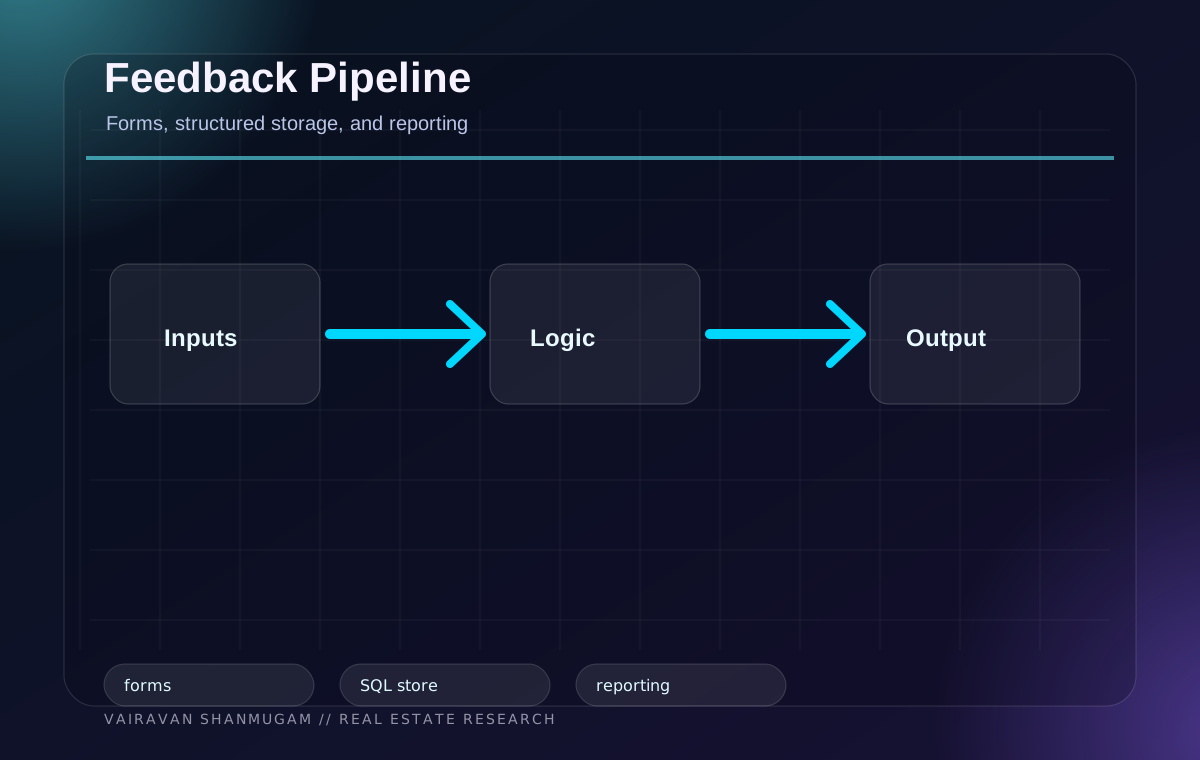
An ingestion workflow that moved Google Form responses into SQL on a schedule so Power BI dashboards could refresh close to real time without paid middleware.
RGoogle SheetsGoogle FormsSQL ServerPower BI IngestionDirectQueryGoogle FormsOperational Dashboards
Outcome: Created a practical low-cost pipeline that kept customer-feedback dashboards updated within minutes of submission.
Problem
Google Forms and Google Sheets are convenient for collecting feedback, but they are not designed to behave like a production data source for live dashboards.
In this case, the goal was to show customer feedback inside Power BI with near-real-time refresh. The challenge was that a direct live connection from Google Sheets into the dashboard stack was either limited or dependent on paid tooling that was unnecessary for the scale of the problem.
Approach
I built a lightweight scheduled pipeline in R to bridge that gap.
- Feedback submissions were collected through Google Forms and stored in Google Sheets.
- The script pulled the sheet contents at defined intervals.
- New rows were separated from records that had already been ingested.
- The fresh data was written into SQL Server, where the dashboard layer could query it more reliably.
The design was intentionally simple: use the tools already available, add only the minimum logic needed for incremental updates, and make the dashboard behave more like a live operational view.
Technical Notes
The important part of the workflow was not just moving data from one place to another. It was making sure the process could run repeatedly without duplicating old rows or requiring someone to supervise every refresh.
That meant the script had to:
- identify what was new
- handle repeated polling cleanly
- write the output back into a dashboard-friendly SQL structure
Why It Mattered
This project is a good example of the kind of technical work I value: not flashy infrastructure, but pragmatic pipeline design that solves a real reporting bottleneck.
It turned a basic feedback form into something operational, letting teams see issues quickly instead of waiting for manual exports or delayed summaries.