Problem
Interest-rate shifts affect housing markets, but the relationship is rarely clean or immediate.
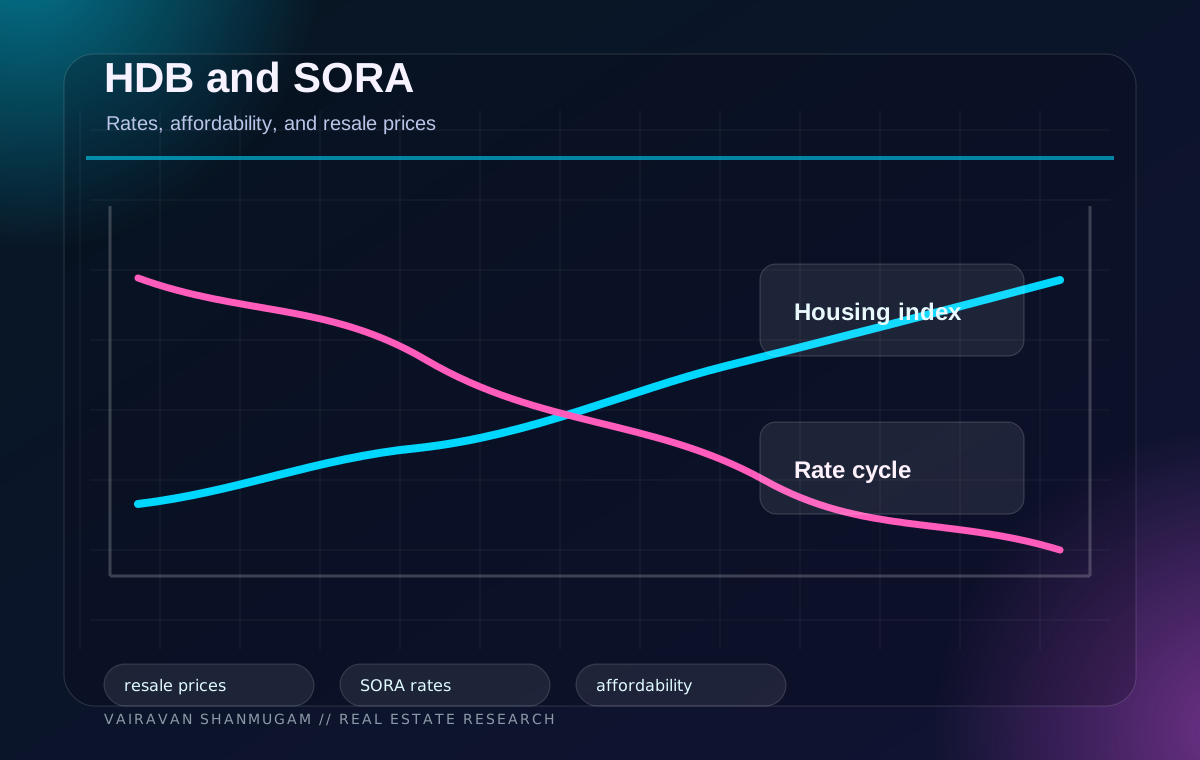
In Singapore, one of the more useful questions is not just whether rates went up or down, but how financing conditions interacted with HDB resale behaviour across towns, transaction bands, and time periods.
Approach
I built a workflow that combined market and macro data into the same analytical frame.
- MAS SORA data was used to track the financing backdrop over time.
- SQL queries pulled HDB resale transactions across multiple years so 2023 activity could be compared against earlier periods.
- Higher-value transactions were isolated as one way of reading where resilience or pressure might be showing up more clearly.
- Python and GeoPandas were used to aggregate the results by HDB town and prepare them for mapping.
This made it possible to compare changes in median resale prices, transaction distribution, and town-level movement against a changing interest-rate environment.
What the Analysis Looked For
The project was designed to answer practical questions such as:
- which HDB towns saw larger median price changes between 2022 and 2023
- where higher-value resale activity was concentrated
- how rising rate conditions coincided with changes in transaction behaviour
The goal was not to claim a simple one-variable explanation for the market. Housing prices move through a mix of policy, supply, financing, and local demand conditions. But rates are one of the most important parts of that system, and they need to be analyzed in context rather than in isolation.
Why It Mattered
This case study is closer to the kind of public-facing market work I want this portfolio to represent.
It connects macro conditions to actual housing-market behaviour, uses maps to make the variation legible across towns, and treats market interpretation as a structured exercise rather than a headline reaction. That makes it useful both as research and as a framework for market commentary.